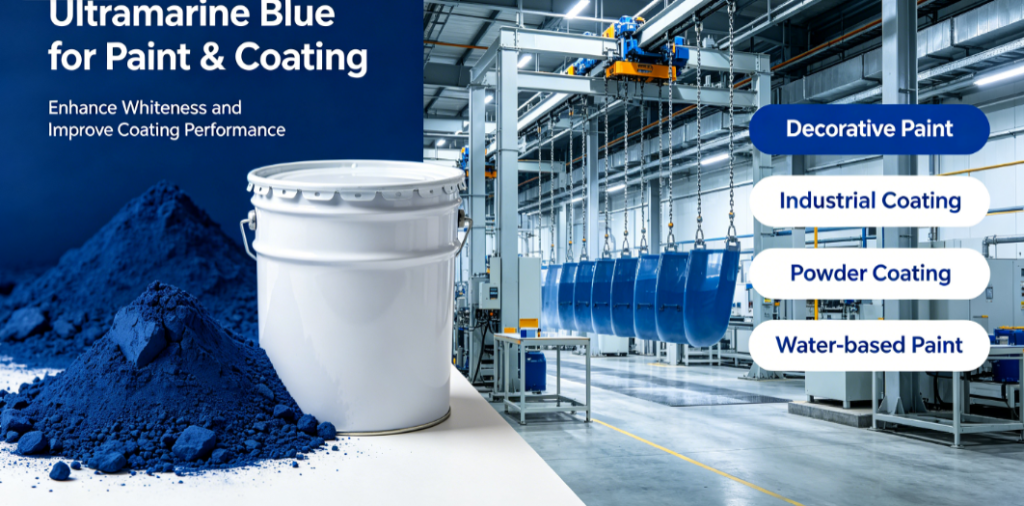
In today’s paint and coating industry, visual appearance is just as important as performance. Consumers expect coatings to have excellent whiteness, brightness and long-term color stability.
To achieve this effect, many manufacturers incorporate Ultramarine Blue (Pigment Blue 29) into their formulations. Although only a very small dosage is required, this pigment can significantly improve the visual quality of paints and coatings.
Ultramarine Blue has therefore become an essential additive in decorative paints, industrial coatings and powder coating systems.
What is Ultramarine Blue?
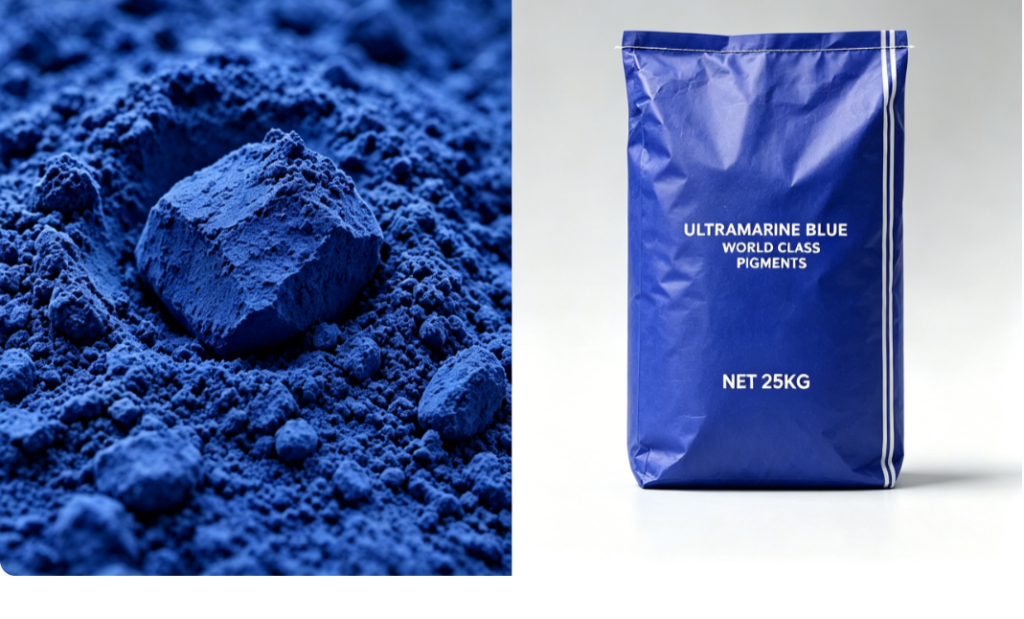
Ultramarine Blue is an inorganic blue pigment composed mainly of sodium aluminosilicate containing sulfur. It is classified as Pigment Blue 29 (PB29) and is widely recognized for its excellent heat resistance, light fastness and weather stability.
Unlike organic blue pigments, Ultramarine Blue offers excellent performance in high-temperature coating applications and can also act as an optical whitening agent.
Its primary functions in coatings include:
- Neutralizing yellow tones
- Improving whiteness
- Enhancing visual brightness
- Adjusting color tone
- Increasing coating attractiveness
Why is Ultramarine Blue Added to Paint?
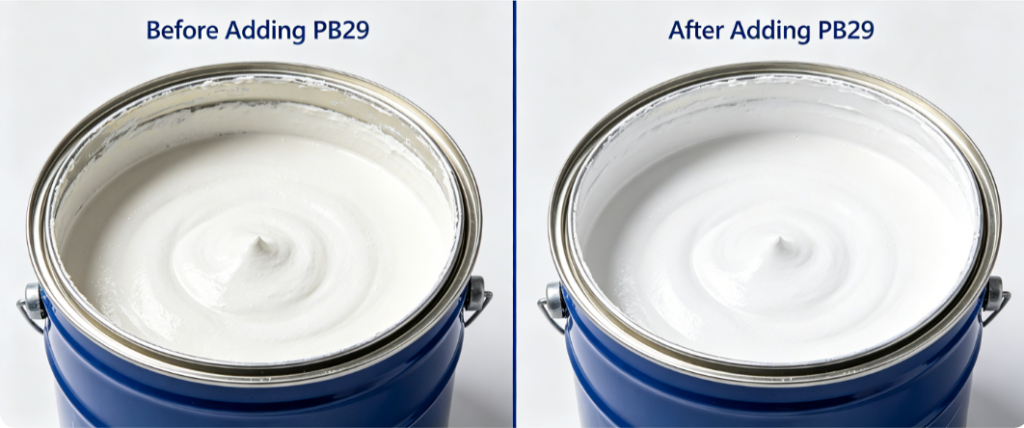
Most white paints tend to develop a slight yellow hue because of resin characteristics, fillers or environmental factors.
By adding a tiny amount of Ultramarine Blue, the yellow tint can be neutralized, making the coating appear cleaner and brighter.
This optical effect is widely used by paint manufacturers around the world.
Key Benefits of Ultramarine Blue for Paint & Coating
Excellent Whitening Effect
Even a small addition can significantly improve paint whiteness.
Outstanding Heat Resistance
Suitable for powder coatings and high-temperature curing systems.
Superior Light Fastness
Provides long-term color stability under sunlight.
Good Weather Resistance
Suitable for exterior applications.
Cost-Effective Performance
Low addition levels produce excellent results.
Typical Technical Properties of Ultramarine Blue
| Property | Typical Value |
|---|---|
| Color Index | Pigment Blue 29 |
| Chemical Type | Inorganic Pigment |
| Heat Resistance | 350℃ |
| Light Fastness | 7-8 |
| Weather Resistance | Excellent |
| Oil Absorption | 35-45% |
| Particle Size | 1-3 μm |
| Density | 2.35 g/cm³ |
| Solubility | Insoluble in Water |
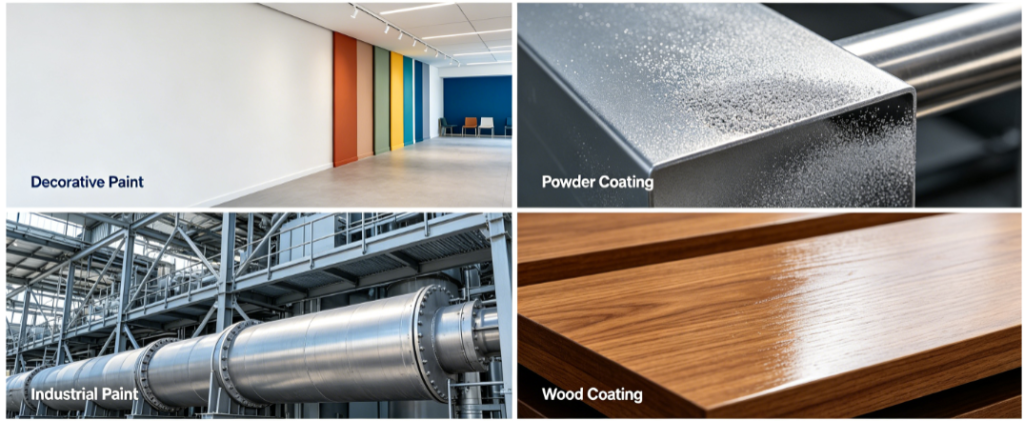
Applications of Ultramarine Blue in Paint and Coating
Ultramarine Blue is widely used in various coating systems.
Decorative Paint
Improves whiteness and appearance.
Industrial Coating
Provides color adjustment and excellent stability.
Powder Coating
Maintains performance during baking.
Wood Coating
Creates cleaner white finishes.
Water-Based Paint
Provides good dispersion and color consistency.
Recommended Addition Levels
The dosage depends on the formulation and whiteness requirements.
Recommended Addition Levels
| Application | Recommended Dosage |
|---|---|
| Decorative Paint | 0.01%-0.05% |
| Industrial Coating | 0.02%-0.08% |
| Powder Coating | 0.02%-0.06% |
| Water-Based Paint | 0.01%-0.05% |
Actual dosage should be determined through laboratory trials.
How to Choose the Right Ultramarine Blue Grade
When selecting Ultramarine Blue, consider the following factors:
✔ Required whiteness level
✔ Dispersion performance
✔ Heat resistance requirement
✔ Paint system compatibility
✔ Weather resistance requirements
✔ Cost efficiency
Choosing the correct grade can improve production efficiency and ensure stable coating quality.
Why Choose Sunnypow Ultramarine Blue?
Sunnypow supplies high-quality Ultramarine Blue pigments for the global paint and coating industry.
Our advantages include:
- Stable quality consistency
- Excellent dispersion
- High brightness performance
- Technical support
- Fast global delivery
- Free samples available
FAQ
Is Ultramarine Blue suitable for powder coatings?
Yes. It has excellent thermal stability up to 350℃.
Can Ultramarine Blue improve paint whiteness?
Yes. It neutralizes yellow undertones and creates a brighter white appearance.
Is Ultramarine Blue suitable for water-based coatings?
Yes. It shows excellent compatibility in many waterborne systems.